Runner architecture
Primary length, diameter and route must be considered together. Packaging, firing order, target operating range and access can matter as much as theoretical symmetry.
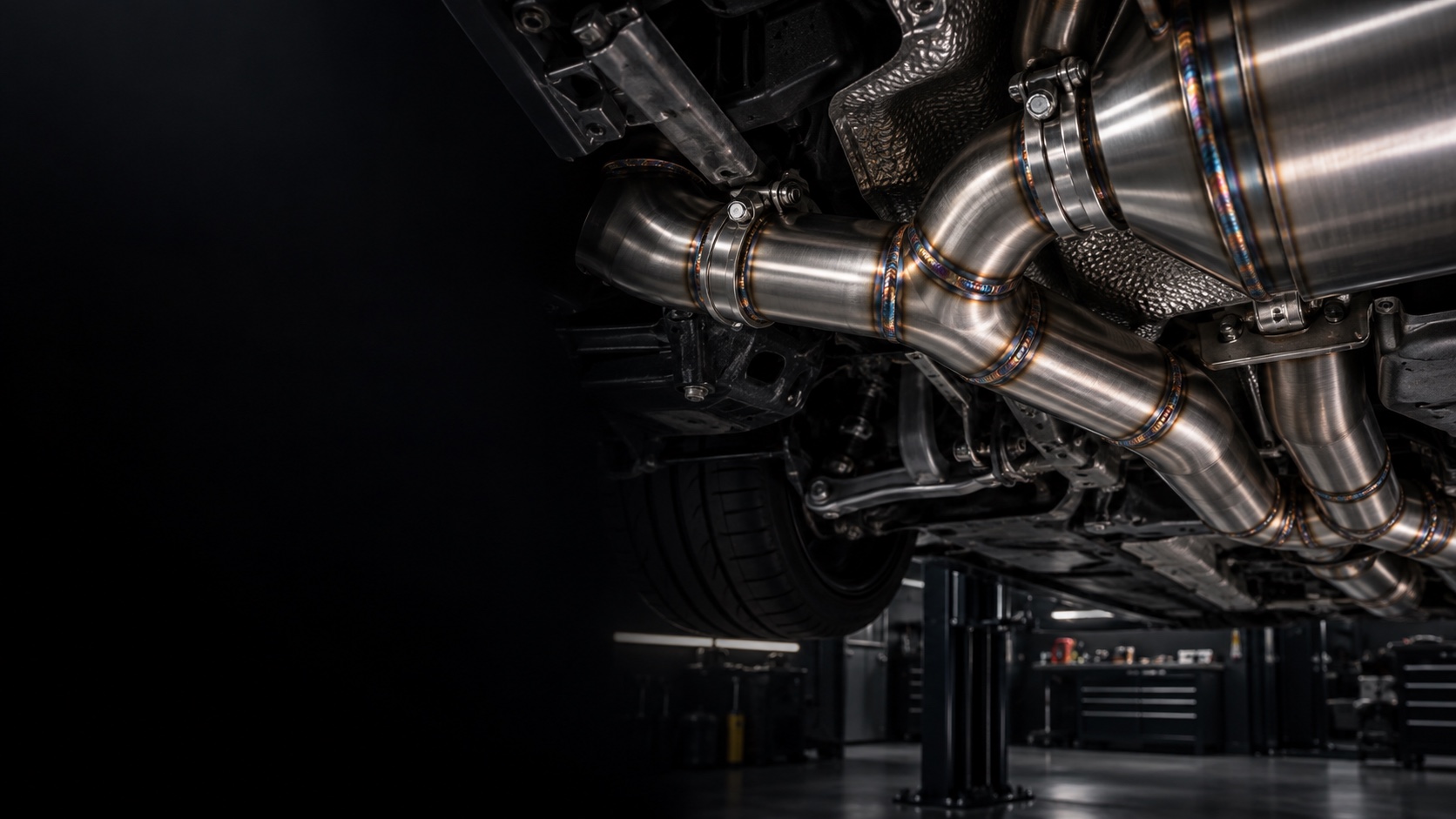
For naturally aspirated, turbocharged, engine-swap and tightly packaged projects where an off-the-shelf manifold cannot provide the required fit, routing or service access.
Call for pricing
Workshop
Birmingham, West Midlands
Projects
Welcoming suitable builds from across the UK
First step
Vehicle brief and assessment
High-grade T304 and 316H stainless steel, with aluminium used where appropriate.
Purge-welded fabrication for clean internal joints and durable construction.
Mandrel bends used for suitable high-performance applications.
Lifetime workmanship warranty, subject to the terms supplied with the quotation.
A documented manifold specification built around the engine, chassis, turbo position, downstream exhaust and the vehicle's intended use, not an isolated set of attractive welds.
These are the project-specific choices discussed before the fabrication scope is approved.
Primary length, diameter and route must be considered together. Packaging, firing order, target operating range and access can matter as much as theoretical symmetry.
Collector geometry, flange thickness, port transition and support strategy affect sealing, durability and how the manifold behaves through repeated heat cycles.
Material is selected against temperature, wall thickness, vehicle use, repairability and budget. Heat shields, coatings and nearby components are planned before fabrication begins.
A manifold still needs to work when the vehicle requires maintenance. Fastener access, sensor removal, starter clearance and engine movement are reviewed during the layout stage.
Manifold performance cannot be judged from runner length alone. Port shape, engine specification, cam timing, turbo selection, exhaust diameter and the intended rev range all affect the brief. Pi Motorsport starts with the complete vehicle and defines the real constraint before choosing a layout.
For conversion work, the correct answer may prioritise clearance, durability and service access over a visually dramatic route. The proposal should explain those trade-offs so the owner understands why a particular configuration has been chosen.
Turbo position changes oil-drain angle, intake routing, downpipe access, heat exposure and bonnet clearance. External wastegate placement also needs a clean gas path and a sensible return or screamer-pipe route. These interfaces are agreed before the final runners are committed.
Where another specialist is responsible for calibration or engine assembly, their written requirements should be supplied at the start. That keeps flange type, sensor provisions and downstream diameter aligned across the project.
Tube preparation, fit-up, purge practice, mounting and distortion control all influence the finished manifold. The visible weld is only one part of quality; internal transitions, flange flatness, support and clearances need equal attention.
At handover, the owner should know the agreed material, system boundary, heat-management plan and any follow-up inspection recommended after initial heat cycles. Complex projects can be photographed and documented for future maintenance.
Pi Motorsport is based in Birmingham, but specialist manifold projects can justify travel from across the UK. Send the engine and chassis details, photographs of the installation, turbo or collector requirements, powertrain changes and intended use before arranging transport.
Long-distance work is planned in stages when required: remote brief, physical assessment, approved specification, fabrication and collection. That is more reliable than promising a final design from a registration number alone.
Completion standard
Our workshop is at 44a Tyburn Road in Birmingham. If you are travelling from elsewhere in the UK, send the vehicle details and intended result first. We can discuss the likely scope, appointment and workshop time before you arrange travel.
Plan a specialist workshop visitThe next step
For an unfamiliar vehicle or a project still being specified, start with an exhaust assessment. A complete installation slot is best reserved once the work has been agreed with the workshop.
View service availabilityA buyer's guide to stainless exhaust material, wall thickness, welding, supports, finish and the details that influence service life.
Read the guideHow runner layout, collectors, flanges, heat, access and the rest of the exhaust shape a custom manifold project.
Read the guideQuestions before booking
Custom downpipes designed around the turbo outlet, sensors, heat and downstream system.
Explore the serviceBespoke catback systems built around your car, your tone and your driving.
Explore the serviceResonator delete pipes fabricated to release a deeper, more aggressive tone.
Explore the serviceSend the vehicle specification, current setup, intended use and the result you want. We’ll confirm the right next step before you arrange travel or pay a deposit.