System boundary
The quote identifies exactly where fabrication starts and ends, what is retained and which supplied parts remain the owner's responsibility.
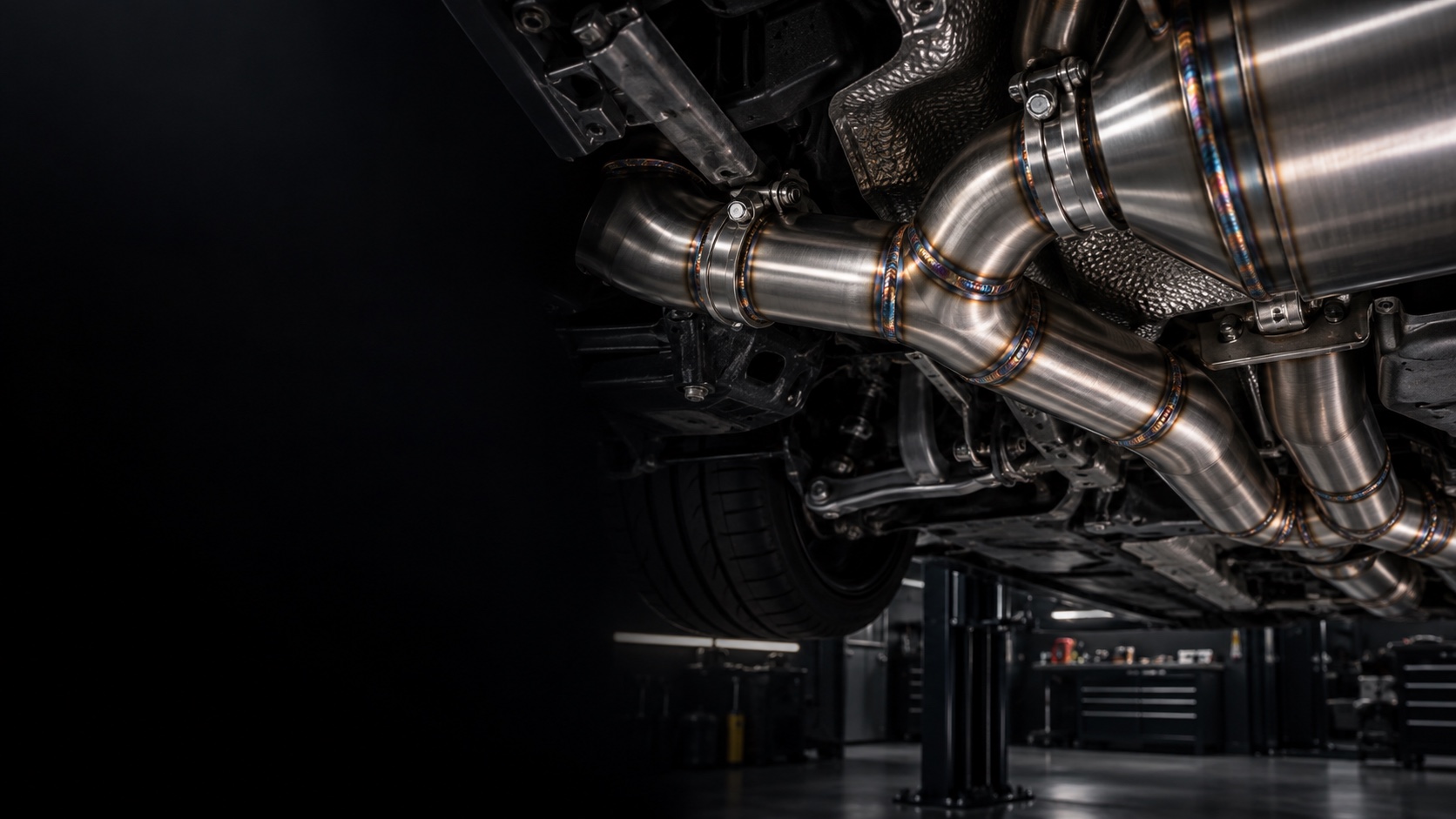
For modified, converted or specialist turbocharged vehicles requiring a coherent system from the turbo outlet rearwards.
Call for pricing
Workshop
Birmingham, West Midlands
Projects
Welcoming suitable builds from across the UK
First step
Vehicle brief and assessment
High-grade T304 and 316H stainless steel, with aluminium used where appropriate.
Purge-welded fabrication for clean internal joints and durable construction.
Mandrel bends used for suitable high-performance applications.
Lifetime workmanship warranty, subject to the terms supplied with the quotation.
A defined system map showing retained components, flanges, sensors, pipe diameter, flexible sections, joints, silencers, tips and legal or calibration dependencies before fabrication starts.
These are the project-specific choices discussed before the fabrication scope is approved.
The quote identifies exactly where fabrication starts and ends, what is retained and which supplied parts remain the owner's responsibility.
Sensor position, flexible joints, catalysts or other retained equipment are planned from confirmed vehicle and calibration requirements.
Turbo outlet temperatures, nearby hoses, bodywork, drivetrain movement and underbody clearance shape the route.
A complete system needs deliberate silencers and resonators; diameter alone does not define a successful exhaust.
A turbo-back combines several interfaces that are often purchased separately: turbo outlet, downpipe, flexible section, sensors, catalysts or retained emissions hardware, centre section, silencers and rear exits. Planning them together reduces mismatched flanges, abrupt transitions and inaccessible joints.
The written scope should identify every boundary and assumption. This is especially important when the customer supplies components or another company is responsible for engine calibration.
Tube diameter must suit the engine and intended output while still fitting the chassis with appropriate clearance. Bigger is not automatically better when it compromises route, ground clearance or sound control.
Flexible sections, supports and joint placement accommodate movement and make future servicing possible. Heat-sensitive components are identified before the route is fixed, with shielding requirements agreed as part of the build.
Pi Motorsport does not treat removal of required emissions equipment as a substitute for diagnosis or compliant specification. The retained components and road-use status must be clear before fabrication begins.
Owners remain responsible for insurer disclosure and vehicle-specific legal obligations. Where calibration affects sensor or component requirements, obtain the calibrator's written specification before the workshop booking.
For projects travelling to Birmingham, send the turbo specification, photographs, current exhaust map, supplied-component details and calibration contact. Pi Motorsport can then identify missing interfaces before the car occupies a fabrication bay.
Allow flexibility around seized fasteners, previous fabrication and unexpected clearance issues. Collection travel should follow the confirmed workshop window rather than the earliest possible estimate.
Completion standard
Our workshop is at 44a Tyburn Road in Birmingham. If you are travelling from elsewhere in the UK, send the vehicle details and intended result first. We can discuss the likely scope, appointment and workshop time before you arrange travel.
Plan a specialist workshop visitThe next step
For an unfamiliar vehicle or a project still being specified, start with an exhaust assessment. A complete installation slot is best reserved once the work has been agreed with the workshop.
View service availabilityA clear comparison of cat-back and turbo-back exhaust systems, including scope, sound, fitment and the questions to answer before choosing.
Read the guideA practical guide to sound, materials, pipework, silencers and the details worth agreeing before a custom cat-back is fabricated.
Read the guideQuestions before booking
Bespoke tubular and merge collector manifolds fabricated in-house.
Explore the serviceCustom downpipes designed around the turbo outlet, sensors, heat and downstream system.
Explore the serviceBespoke catback systems built around your car, your tone and your driving.
Explore the serviceSend the vehicle specification, current setup, intended use and the result you want. We’ll confirm the right next step before you arrange travel or pay a deposit.