
Exhaust Heat Management: Protecting the Floor, Bumpers and Nearby Components
Exhaust components carry substantial heat beneath a vehicle, with the highest demands usually closer to the engine, turbocharger and emissions equipment. Safe fabrication controls where that heat travels through routing, clearance, shielding and support rather than relying on one universal coating or wrap.
What this guide helps you decide
Use this guide to identify heat-sensitive areas, prepare a fabrication brief and understand how Pi Motorsport evaluates routing and protection before a custom exhaust is built.
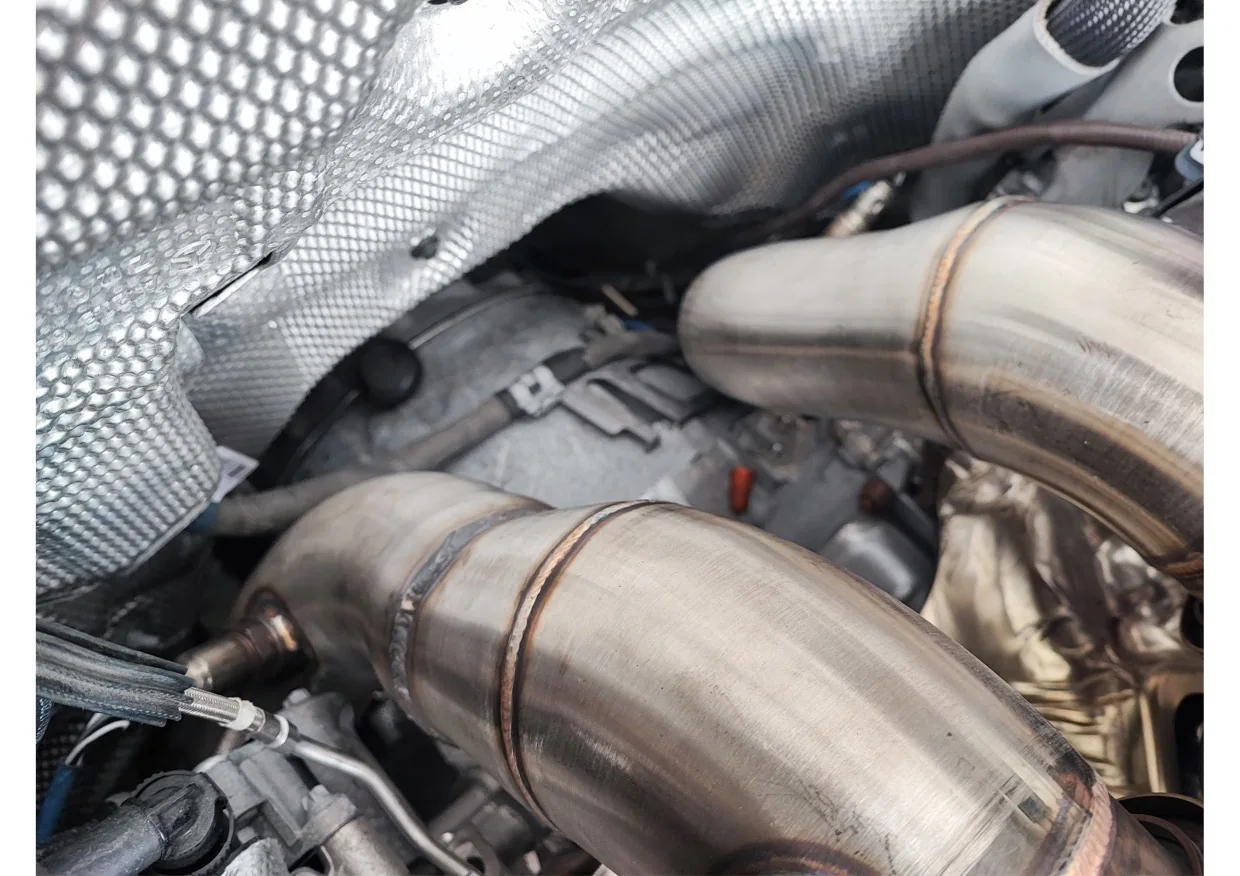
Identify heat sources and vulnerable components
Manifolds, turbo sections, catalysts and nearby pipework can run hotter than rear sections. Fuel and brake lines, wiring, hoses, underbody materials, floors and bumper trim have different tolerances. The inspection should map both the source and what surrounds it.
Engine changes or a new route can put heat where the original vehicle had no shield. Retaining one factory panel does not automatically protect a component moved closer to the exhaust.
Clearance and airflow are the first controls
Distance reduces radiant and conducted heat, while airflow helps remove it. A smooth route with safe gaps is preferable to forcing pipework against a shield. The required space depends on temperature, material, vehicle movement and what sits nearby.
Clearance must remain when the engine moves, suspension travels and the exhaust expands. A cold static measurement is the start, not the complete verification.
Heat shields need an intentional air gap
A shield intercepts radiation and works best when installed with suitable separation rather than pressed against both hot pipe and protected surface. Material, coverage, mounting and ventilation determine whether it manages heat or merely transfers it elsewhere.
Fixings must remain secure through vibration and service. A loose shield can rattle or contact the exhaust. The DVSA manual notes heat-shield absence becomes an MOT concern where there is a fire risk involving fuel-system components, underlining that shielding is functional safety equipment.
Wraps and coatings have defined roles
Thermal wrap can retain heat within a component and reduce some external radiation, but it changes the component's thermal environment and can hide condition. Moisture, material compatibility, installation and service access need consideration. It should not disguise inadequate clearance.
Coatings vary in purpose and temperature capability. Ask what problem the treatment solves and whether the underlying route is already safe. A product name is not a substitute for a heat-management plan.
Bumpers and tailpipes require protection
Outlet projection, angle and gap affect how hot gas and soot reach the bumper. Tips set too far inward can heat or mark surrounding trim; tips set too far out create other fit and contact concerns. Twin outlets need consistent spacing.
Valves may change which outlet or path carries the highest flow. Both operating modes should be assessed so one setting does not direct heat toward trim or another component unexpectedly.
Look for evidence of excessive heat
Discoloured trim, brittle wiring, softened underseal, unusual floor temperature or marks around a shield justify inspection. Smells after new fabrication may be temporary residues, but persistent burning odour should not be dismissed without identifying its source.
Stop using the vehicle if there is smoke, fuel-system concern or evidence that hot exhaust is contacting combustible material. Do not touch or inspect a hot system without safe equipment.
- Discoloured or distorted trim
- Damaged wiring or hoses
- Loose or missing shields
- Contact marks on pipework
- Excess cabin-floor temperature
Document the heat strategy in the build
The quote should identify tight-clearance areas, new shields or retained protection and any coating or wrap. Where a conversion moves the engine or exhaust, photographs before final assembly can document hidden clearances for later maintenance.
Pi Motorsport treats heat management as part of routing and fitment, not an optional cosmetic add-on. The finished system should protect surrounding parts in normal operation while remaining accessible enough to inspect as the vehicle ages.
Complete a heat-risk walkaround
Before fabrication, trace the route from the hottest upstream section to the outlet and list every nearby fuel line, brake line, harness, hose, boot, floor panel, undertray and bumper surface. Mark areas where factory shields are absent, altered or likely to be removed for the build. Engine conversions should include components moved from their standard positions, not merely the original vehicle diagram.
After installation, recheck the same list with the system secured and at an appropriate operating temperature using safe workshop methods. The output should be specific: adequate clearance, added shield, relocated line or further protection required. This gives Pi Motorsport and the owner a documented safety purpose for each heat-management measure instead of applying wrap or reflective material indiscriminately.
Verify heat management after the vehicle returns to use
The completed car should be checked in the conditions that generate meaningful heat, using safe workshop methods rather than touching components or relying on smell alone. Inspect shield security, nearby hoses and wiring, floor or trim condition and any area where the route passes close to a fuel-system component. Valve modes, engine load and undertray installation can change local airflow, so the final configuration matters.
Owners should report persistent burning odour, new discolouration, softened trim, unusual cabin-floor heat or a rattle from shielding. A record of the original clearances and added protection makes that report easier to investigate. This follow-up focus supports long-tail searches from drivers who already have a custom exhaust and positions Pi Motorsport for inspection and correction work, not only new-system enquiries.