
Customer build / 2016 / 2.0-litre TFSI
SEAT Leon Cupra 290: a bespoke valved exhaust mid-section.
A 2016 SEAT Leon Cupra 290 arrived with previous exhaust modifications and a brief for greater sound control. We repaired an exhaust leak, then fabricated a T304 stainless steel valved middle section with two high-flow resonators, retaining the original rear silencer and tailpipes.
By Pi Motorsport · Published
Explore our valved exhaust service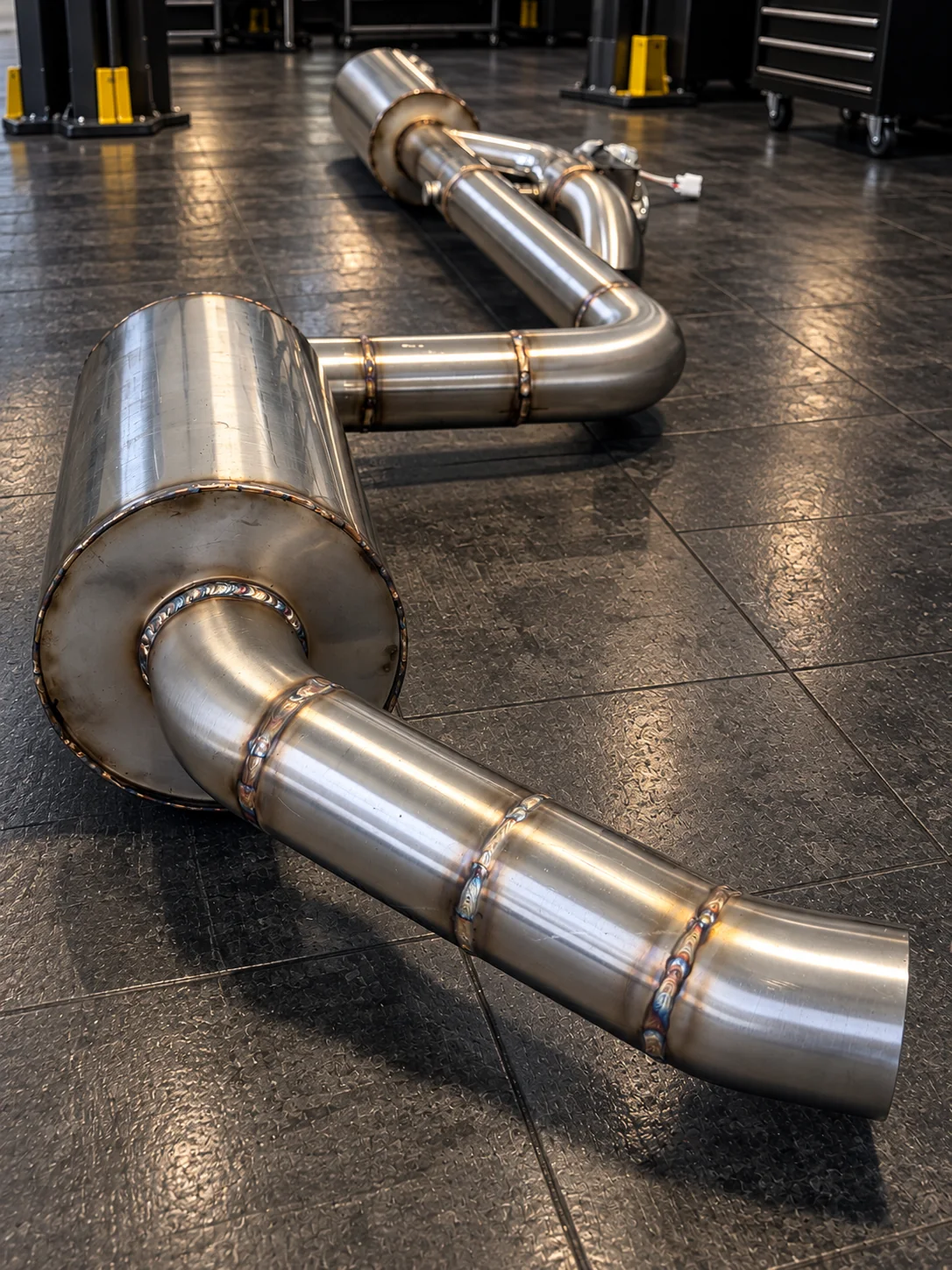
The vehicle and build specification.
- Vehicle
- 2016 SEAT Leon Cupra 290
- Engine
- 2.0-litre TFSI
- Work
- Custom valved exhaust middle section and exhaust leak repair
- Pipework
- T304 stainless steel
- Sound control
- Two high-flow resonators and the original rear silencer
- Valve
- One stainless steel electronic exhaust valve
- Operation
- Remote fob
- Connections
- Welded directly to the existing exhaust system
- Mounting
- Stainless steel brackets
- Tailpipes
- Original tailpipes retained
The brief: a sportier exhaust without losing a refined setting
The owner wanted to improve the Cupra's existing exhaust while keeping the option of a refined, near-stock sound when required. The aim was not simply to make the car louder. It was to give the driver useful control over the exhaust note, with a more purposeful open-valve setting and a quieter character when the valve was closed.
Because the car already had a modified downpipe and a resonator delete, the starting point mattered. A valve added to an already modified system would not automatically recreate the sound of the original exhaust. We needed to inspect what was fitted, repair any faults and plan the silencing around the whole system.
Inspecting the previous modifications and repairing the leak
Our inspection found that a previous silencer removal had introduced a resonator-delete pipe smaller in diameter than the original pipework. That reduction had the potential to restrict exhaust gas flow, particularly at wide-open throttle. The condition and layout of these earlier modifications were considered when planning the replacement middle section.
We also found poor-quality modifications around the downpipe section, including an exhaust gas leak. Our TIG welding specialists repaired the affected area before work continued on the new valved section. Correcting the existing fault first meant the new installation was not being built around a leaking joint.
This is why an exhaust assessment comes before specifying a bespoke system. Previous modifications, joints and available space can all change the work required, even on two examples of the same vehicle model.
What we built: a T304 stainless steel valved middle section
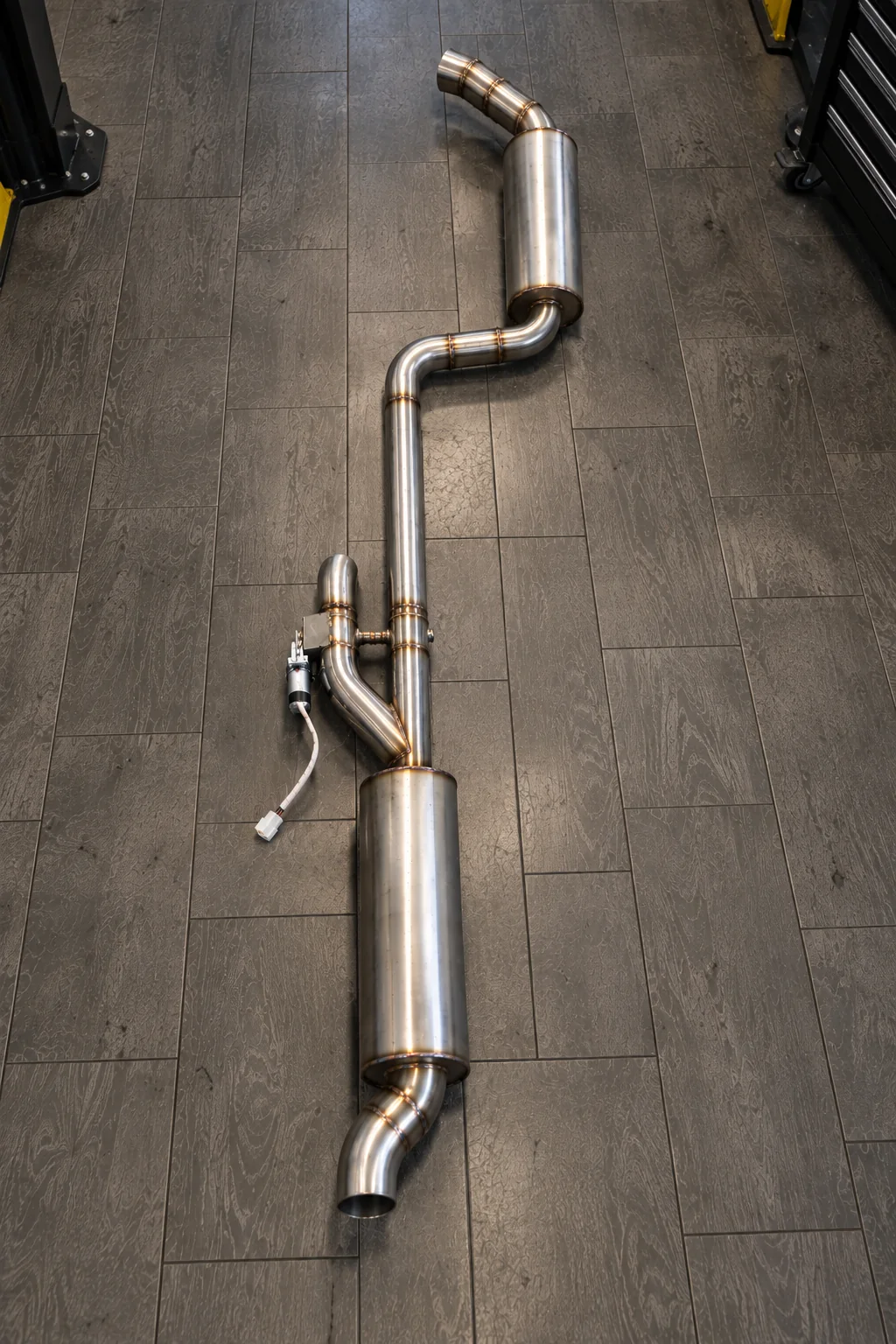
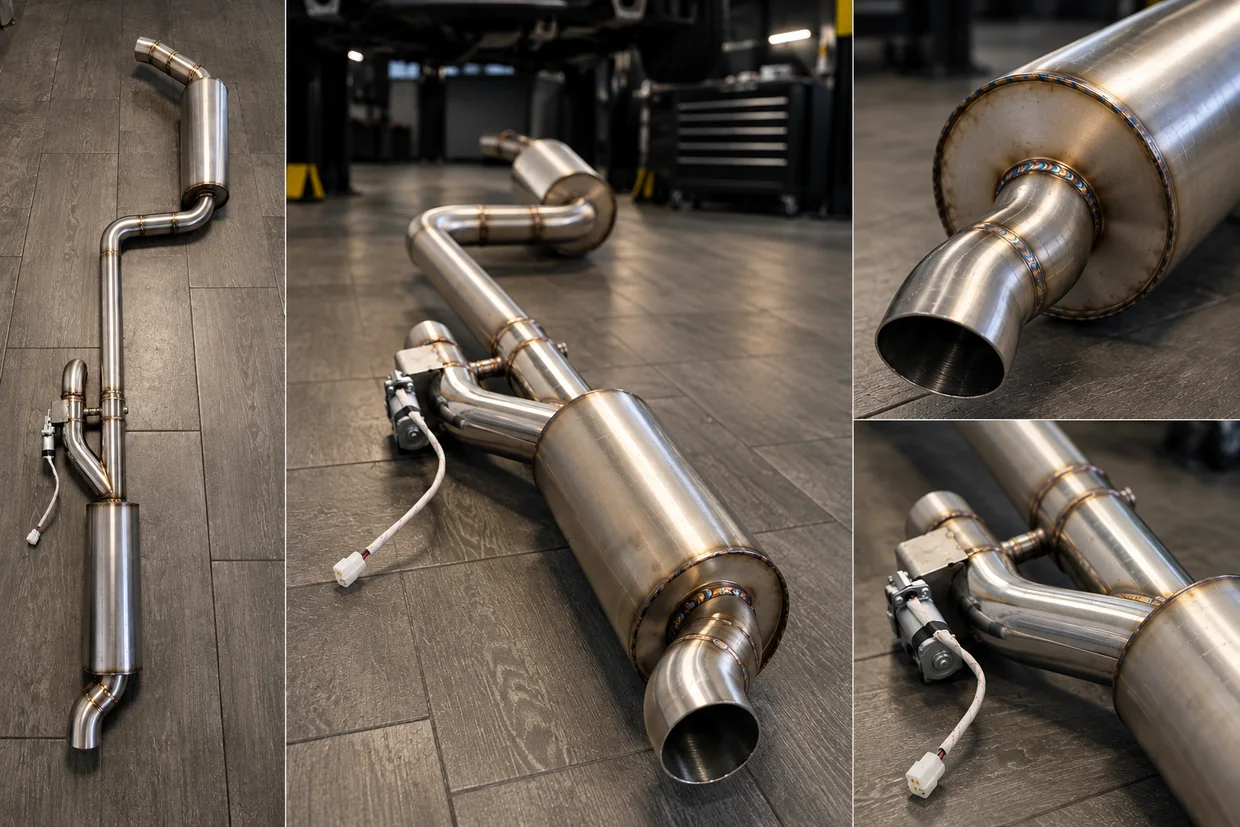
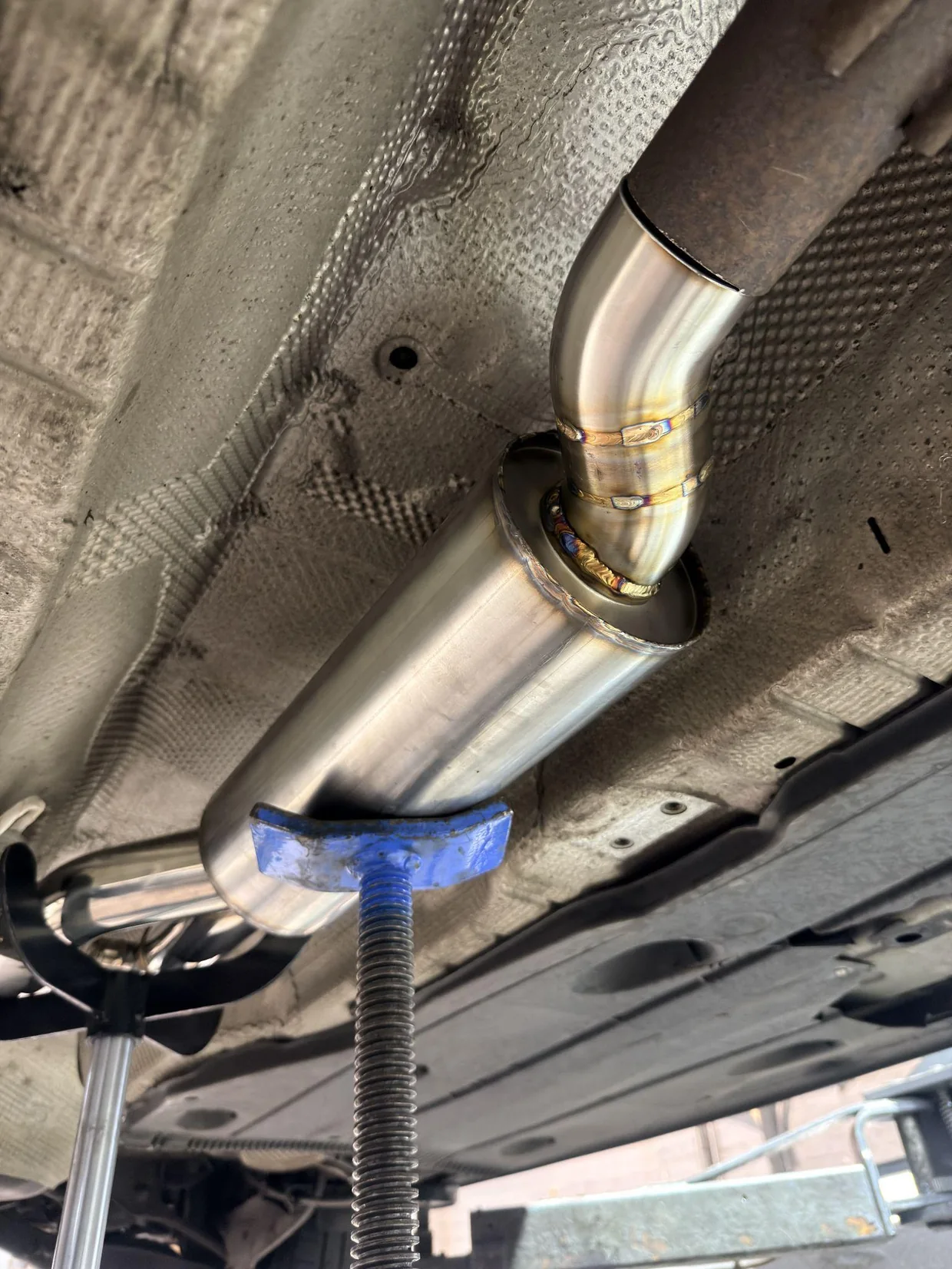
We fabricated a custom exhaust middle section using T304 stainless steel pipework, two high-flow resonators and one stainless steel electronic exhaust valve. The assembly was welded directly into the existing exhaust system and mounted using stainless steel brackets. The original rear silencer and original tailpipes were retained.
This was a bespoke mid-section project, not a replacement of every exhaust component. The modified downpipe was part of the car's existing setup. The work combined repair of its affected area with a new middle section designed to suit the vehicle and the customer's requirements.
The layout was planned around the available chassis space, ground clearance, heat management and the sound in both valve positions. Valve placement is not just a packaging decision: it changes the route exhaust gases take and which silencing components remain in that route.
Why the resonator position mattered on this Cupra
With the earlier resonator delete and modified downpipe, the original rear silencer was doing much of the remaining noise-control work. Simply placing a valve ahead of that silencer would have created an extremely loud, effectively straight-through route when open. When closed, it would have sounded much like the car did on arrival, rather than delivering the refined setting the customer wanted.
To balance those two settings, we added high-flow silencing to compensate for some of the sound control lost through the previous modifications. A high-flow resonator was positioned before the exhaust valve, so gases pass through it with the valve either open or closed. That gives both configurations a degree of sound control instead of leaving the open setting completely unsilenced.
The second resonator, retained rear silencer and valve layout were considered as parts of one system. The objective was to bring the closed-valve character closer to the original exhaust while allowing a sportier sound when open, within the space available and the customer's budget.
The result: two sound characters, one tailored installation
The electronic valve is operated using a remote fob. With the valve closed, the additional silencing brings the sound closer to a refined, near-stock character. With it open, the car has a sportier, more aggressive exhaust note while still passing through the resonator ahead of the valve.
Keeping the original tailpipes meant this project focused on the middle section and sound control rather than changing the rear appearance. The result was a bespoke installation built around this Cupra's existing modifications, rather than a generic off-the-shelf solution.
The finished sound reflects this particular build and its starting point. A different engine, downpipe, rear silencer or existing modification can produce a different result and needs its own assessment. For another Cupra owner, the useful starting point is the same: explain the desired sound in both settings and let the workshop assess the existing system before choosing a layout.
Cupra 290 exhaust fabrication and installation photos.
Actual photographs supplied by Pi Motorsport for this build, showing the mid-section layout, valve assembly, welded pipework and installation.
Customer feedback
What the owner said.
“Got a valve system & silencers fitted to my cupra . Great customer service and finished before the original estimated time”
Questions about this Cupra build.
Understand the options before planning your exhaust.
Tell the workshop how the car is used and which exhaust parts have already been changed. This build is an example of bespoke sound control, not a universal specification for every Leon Cupra. Review the valved exhaust service guide, then get in touch to discuss a layout suited to your vehicle.